

2026 · Design, build, and go-to-market
Summer of Soccer
Self-initiated, for South Shore bars
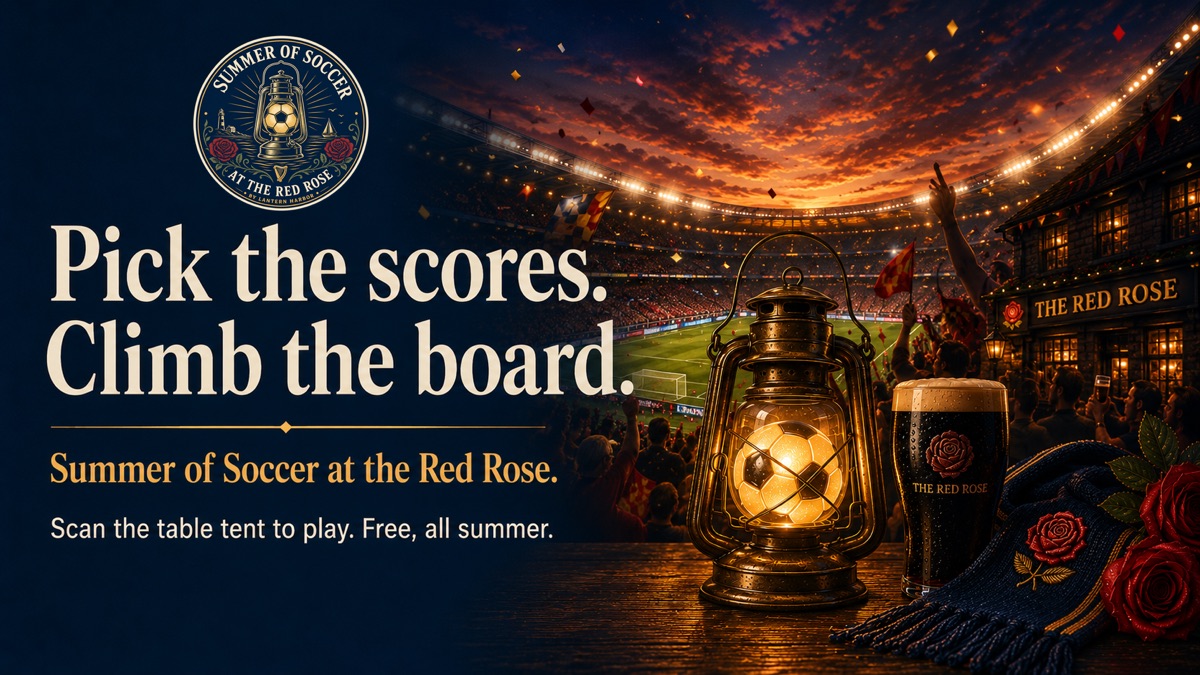
A multi-tenant score-prediction game for the 2026 World Cup, built so an independent bar can run its own prize pool on the big screen — patrons prove they are in the room, predict the scores, and climb a named leaderboard on the TV, while the owner keeps the opt-in customer list it builds.
Built with
- FastAPI
- SQLite
- Fly.io
Highlights
- Piloted at the Red Rose Irish Pub through the 2026 World Cup — 35 of the 42 regulars signed up in the tournament's first week, and 41 of the 42 played
- 1,823 score predictions over six weeks; 21 regulars checked in at the bar 175 times across 34 separate nights — verified repeat visits, not vanity sign-ups
- The bar kept a customer list of 27 contacts, a dozen opted in — owned outright, not rented from a platform
- Multi-tenant by design — every venue gets its own themed leaderboard, prize, and customer list from one codebase and a one-line config
- Physical-presence check-in, timestamped opt-in consent, and a sweepstakes-compliant prize wrapper, so the fun stays on the right side of the rules
The situation
The 2026 World Cup brings matches to the Boston area, and for a few weeks every neighborhood bar has a reason to be full. But a packed room on match night is temporary. When the final whistle blows, the crowd leaves and the bar has nothing to show for it: no list, no reason for anyone to come back, no easy way to do it again next season.
The consumer apps for predictions and brackets are crowded and national. None of them are built for a single independent bar that just wants its own regulars competing on its own TV.
The work
Summer of Soccer is a score-prediction game built for one bar at a time. A patron scans a QR code, enters a short rotating code shown on the bar’s screens to prove they are actually in the room, and predicts the scores of upcoming matches. An exact score is worth three points, a correct margin two, the right winner one, and those points multiply as the tournament climbs toward the final. Each bar has its own leaderboard on the TV, its own prize, and its own Cup.
It is multi-tenant from the ground up. One codebase and a one-line venue config run every bar, and the same config that powers the live game also generates the printed table tents and the mockup I walk in with. The board on the TV is the brand surface; the opt-in list, captured with logged consent, is the asset the owner keeps.
Every bar that runs it also feeds a public South Shore leaderboard, so a regular at one pub can see how they stack up against the sharpest predictors across the region, on the TV during the match or on their own phone between rounds. Any South Shore bar can stand up its own live game from the same codebase, its leaderboard ready on day one.
The product ships with the unglamorous parts handled: a physical-presence check, a sweepstakes structure with a no-purchase alternate entry and official rules, age gating, and consent capture built to respect how text-message marketing is supposed to work.
The outcome
Summer of Soccer ran at the Red Rose Irish Pub in East Weymouth through the full 2026 World Cup. Sign-up was fast: 35 of the 42 regulars joined in the tournament’s opening week, and 41 of the 42 went on to play — a season-long leaderboard race that stayed tight to the final weekend. The number that matters most to an owner: 21 of those regulars checked in at the bar 175 times across 34 separate nights, verified repeat visits rather than vanity sign-ups. And the Red Rose finished with a list of 27 contacts, a dozen of them opted in to hear from the bar again — a customer list it owns outright, not rented from a platform.
It is a reusable product, not a one-off promotion: the same game runs for football-season pick’em, March Madness, or any venue’s slow-night race once the tournament is over. For the bar, the value outlasts the event — a temporary crowd becomes a named rivalry, a filled slow night, and a customer list the owner can actually use.
What it took, what got skipped
The hard part was not the game. It was everything around it: making the check-in honest, keeping the prize compliant, capturing consent properly, and making a leaderboard look good on a television across a loud room. The game itself is simple on purpose, because the people playing came to watch a match, not to learn an app.
Results posted automatically from the live match feed all tournament, with manual entry kept only as a backstop. What stayed deliberately on hold through the pilot: the outreach itself, where the list and the consent are captured but the sending waits on the parts that should not be rushed; and any consumer-app ambitions. The product stays narrow, built for the independent bar and the moment in front of it.